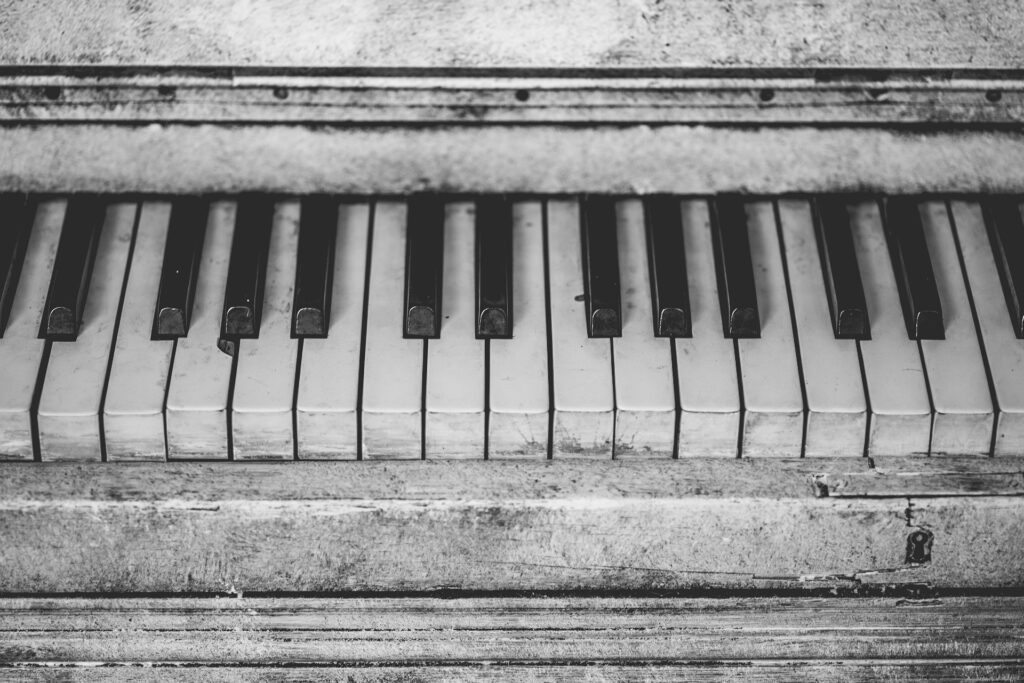
There are many of these piano, organ and other keyboard solos being shared here because there were a lot of them composed and preserved as sheet music. Also because solo keyboard is one of the easier formats to record as a d.i.y. project. A few of the recordings below were done by live musicians, but most were done by using music notation software to produce an audio recording. If the title of the compositions in these lists is a “link,” printed in blue and underlined, then clicking the name will take you to the video/audio on YouTube. If the title is in black ink, there is probably a play bar after the description, so click that to hear the music.
Two piano solos by Orson Pratt, Jr. which were printed in an 1869 magazine on Utah Arts & Culture. Pratt was active as a musician in local concerts & theatres, and as a composer & teacher. Probably some of the earliest classical sheet music (other than hymn books) published in Utah. Here is a set of links to more about this composer. Histories of Orson Pratt Jr.
~~ The Grasshopper – (Click on the name of the piece to hear the piano version.) A fun little exercise with lots of motion, and probably aimed at young players. One commenter around the time of publication even suggested that it was connected with the “Miracle of the Seagulls” incident in Pioneer era history. Upon first hearing this music, my initial thought was that it might also sound great on harp. So I had harpist Obadiah Sharp of Venezuela record this one for me, which may be be heard by clicking below.
~~ Gertrude Mazurka – an elegant “parlor music” or concert selection, from an era when many homes had a piano for entertainment.
Deseret Schottische by Geraldine Warden – Composed by a touring Australian opera singer who visited Salt Lake City for a short series of concerts in 1868, and wanted to leave this musical gift for the many nice people she met and befriended in Utah. She was considered a major “star” as a singer, but was also a versatile and talented pianist who sometimes accompanied her fellow singers as they performed. A synthesized piano track is used in this recording on YouTube.
President Young’s Funeral Song 1877 by George Careless, the chief composer of the Tabernacle Choir. Yes, this is the first of two original compositions attached to the funeral service. Both the March by Daynes and this song by Careless were part of the public services in the Tabernacle. This one was later published as an instrumental for piano in several LDS Church hymnbooks in 1905 and 1925, and that version is presented here. (Audio only – click to play)
Two piano solos by Joseph J. Daynes. Daynes was a celebrated musician of the day, with roles as organist at the Mormon Tabernacle, as a composer of many hymns that still have places in Mormon sacred music, and as a thriving music store merchant, who had multiple shops in the territory.
~~ Brigham Young Funeral March – A somber selection from the 1877, also composed for and played during the funeral services – not just a later “tribute” work. Daynes and Brigham Young knew each other personally as well. “Brother Brigham” recognized the young man’s talent at age 11, and arranged for him to get the best musical education in music conservatories back east. They later shared participation in many services and events in the new Tabernacle for decades. An expert recording of this selection for church organ has been shared by Ben Alder of the St. George, Utah area. His performance of the Brigham Young Funeral March can be heard on his YouTube page, along with other interesting works for organ and piano. This piece was originally for organ but later adapted for piano and sold that way commercially as sheet music. For this video I think that Ben even reimagined (re-created?) the organ version used in this video from the surviving piano sheet music, adding the many extra voicings available on church organs. (A recording of a piano version is also in the works, to be posted someday, depending on clearing permissions…)
~~ ZCMI March estimated to be from the 1870s or 1880s. A rather routine march, titled after Utah’s first chain of major department stores, the Zion’s Cooperative Mercantile Institution, in the same part of town where Daynes’ largest music store was located. Sorry for the clunky sound quality in this version rendered by synthesized piano. If you want to re-record it with more personality and phrasing, let me know and I’ll be happy to share the sheet music.
Irene Schottische composed by “B. Natural.” The educated guess is that the actual composer was Joseph Daynes, who was editor of the magazine that published this sheet music in 1877. The Daynes family had a young daughter named Irene around this time. Such use of pseudonyms was quite common in Utah in this era as editors tried to keep their publications filled to meet deadlines, but did not want it to look like they wrote all the material themselves. (Susa Young Gates did the same for her magazine articles and fiction.) Rather simple, pleasant music that filled a niche for use in parlor music and social dancing, which was so popular at the time. (Audio only – click below to play.)
Three Piano solos by John M. Chamberlain, who was born in England but relocated to Salt Lake City as his family were Mormon converts in the 1860s. He was active in professional music from the 1870s to the 1920s. He had a music publishing company to make it easier for him to distribute his many songs and piano selections. (There is also sheet music available for an ornate piece titled Pearls of Melody – a piano reverie. Packed with scales and runs. Not sure if I’ll ever get to that one for recording. Anybody else want to tackle a real elaborate “showpiece”?)
~~ Peerless Waltz from 1880 has lots of repeats, in the style of the famous J. Strauss waltzes, reminding me of why playing his type of concert waltz was, for me, the most tedious part of playing in orchestras. Mercifully, this one adds a touch of variety by playing phrases an octave higher when repeated. (Currently an audio-only recording. Click the play bar below to hear it.)
~~ Ida Waltz of 1887 was another, even simpler piece for entry level pianists. This one seems like it was perhaps just “filler” rather than a real serious composition. Posting it anyway to show the range of quality in the selections printed in LDS church magazines of the 1800s. (Audio only – click it to waste 2 minutes.)
~~ Thelma – March From 1924 when he was a respected veteran composer, performer, teacher and music publisher. That’s 44 years after his Peerless Waltz listed above. This short piece for young players was composed late in his life, in his 70s, for his young student who was being cared for in a convalescent hospital in Salt Lake City. The score was then shared in an LDS (Mormon) magazine for youth to encourage musical development in others.
Immortellen – Funeral March of 1883 by Anton Pedersen, recorded from printed sheet music found in his collected papers in the Special Collections section of the Marriott Library at the University of Utah. Unfortunately, this is only about half of the piece – just the first and last pages, since the 2 middle pages were missing from the sheet music archive. This recording skips repeats in the score. The title translates as “everlasting”, and was also used as a title by a different composer who wrote a tribute to Johann Strauss around this time. (Also the name of a hardy flower that retains its charms even after dying.) ‘Twas dedicated to the memory of a local doctor. (Audio only – click below to play.)
Two piano solos by Edwin F. Parry who managed, edited and printed several magazines and other publications. He had to learn to typeset music scores of other local notable composers for his print business, which inspired him to start writing his own music. His family was from Wales and were influenced by the deep traditions of community singing there. Most of his compositions were vocal/choral works, but here are a few piano pieces.
~~ Juvenile Polka – 1886 – Titled after the magazine “The Juvenile Instructor” which Parry co-edited, and to which he contributed almost 50 musical pieces over the years. Monthly editions usually included a short original sheet music selection, usually a song or a piano solo such as this one. The magazine was devoted to faith promoting content for Mormon (LDS) youth. Social dancing was widely encouraged to keep youth engaged with the community, so new waltzes and polkas were appreciated.
~~ The Cricket Waltz – 1886 – Seems a bit herky-jerky in spots, possibly intended to represent an insect at play. (Audio only – click below)
Three piano solos by Henry A. Tuckett — Well, this will be an easy entry to write up. Tuckett was, by trade, a candy maker – the biggest in Utah in the late 1800s. But music was always important in his life, and in his later years he even taught vocal/choral studies at the Deseret College, which later became the University of Utah.
~~ My Sweet Heart’s Waltz by Henry A. Tuckett from 1893. This sweet little waltz was published in an LDS Church (Mormon) magazine for youth.
~~ Campaign March – Possibly my favorite of the Utah marches from the 1800s. My first thought is that this title was likely reflecting a political campaign, but might it be possible that it was titled after the other then-current definition – a military expedition? Triplets akimbo. (Audio only recording — click below.)
~~ Thoughts of Home Another example of Tuckett’s sentimental but repetitive style of music. (Audio only with a few glitches in the notation toward the end – can you spot them? Click to hear it.)
On the Beautiful Salt Lake Waltzes, by Anton Pedersen from approx. 1885. To hear an audio-only recording by a live performer click this link. Another piano solo celebrating recreation at the resorts on the shores of the Great Salt Lake. Pederson was also one of the key figures in organizing a local orchestra which evolved, decades later, into the Utah Symphony. Note that the original sheet music for this one was published by Joseph Daynes, another composer on this list. Sheet music for this was located online in the Library of Congress collections. At nearly 7 minutes playing time it is one of the longest selections on this page.
For Edna and Barcarolle Pacific by Charles Frederick Stayner. For Edna is one example from a set of a dozen short piano solos from 1899, each named/titled for a different young lady of his acquaintance. Local libraries in Utah seem to have a few of these selections on file, but this one was found in and copied from the British Library in London, England during my visit there. Of related interest, Stayner also composed several much more ambitious piano solos such as “Barcarolle: The Great Salt Lake” and another “Barcarolle Pacific” which is quite a showpiece. Those will each take time and/or money to capture and eventually be shared here. Click the title link above to hear “For Edna“, chosen for inclusion here because it was my Grandmother’s name. Or click below for a quickie preview of just the the first few measures of the very busy and ornate “Barcarolle Pacific” which Stayner said was his greeting to California. Found in the British Library in a bound volume of mixed sheet music from various composers.
Honorable Mention? Adding this because his name is often in the mix when listing important composers in Mormon/Utah music history. My limited research indicates that John Tullidge was considered a creative force in early LDS hymns, having written both words and music for a full sized book of original works in Liverpool, England in 1857. However, in both England and later in Utah his output was largely in sacred music for congregational singing and choirs. I’ll keep looking for examples of other musical styles by him, but for now here is a set of four short original hymns from that Liverpool collection. To me, this is workmanlike stuff but simply not as interesting as “concert music.” So for variety this demo is played on harpsichord. If I call this “Four from Liverpool” is that rude? Titles might be added someday. (Audio only – click to play.)
... plus a few vintage “Utah related” pieces by non-local composers …
The Mormons Quadrille (1860s?) – In the era of Gilbert & Sullivan there were many other composers producing light operetta and music hall entertainment. One such musician was Charles Coote, Jr., who wrote dozens of crown-pleasing works. Little is known about this piece except that from the cover art of the sheet music it appears to have been a standalone comic farce (not part of a musical theatre work) lampooning polygamy and American bravado. More details to come later when the video recording is completed. The sheet music for this oddity is available in the Special Collections archives of the libraries at BYU and the University of Utah. Thanks are due to BYU for making this available to us. (Audio only recording — click below.)
Utah March of 1858 by Emanuel Marquis. Apart from the title there is nothing particularly connecting either the composer or the music to the region. From a time when composers churned out volumes of sheet music for a music-hungry public, this is what it is – a simple, but unremarkable addition.
The Mormon War – A Grand March by Peter Ricksecker from 1858. The title is striking, but maybe not as dramatic as it teases. There was certainly a series of troublesome conflicts around 1858 which became widely known as the “Mormon War.” Actually, it was more of a diplomatic power struggle, as the leaders in Washington DC did not like the way the Mormon (now LDS) leaders in the Utah Territory were running things in ways that the Feds did not approve of. (Yes, particle dangled.) Troops were sent to Utah as a show of force, however despite the tensions cooler heads prevailed, and little happened other than posturing and taunting, and the establishment of several forts and bases, which continued until Utah was finally granted statehood in the 1890s. But the name “Mormon War” was catchy, so composer Peter Ricksecker of the musically minded Moravian Church movement in Pennsylvania wrote this piece to capitalize on the news of the day. While it is clearly tied to Utah by subject and title, the composer himself probably had no serious connection to Utah. While not by a Utah Composer per se, it is welcome here as a relative. Shots fired, but War settled. Another recording by Tim on Fiverr, but for this one he not only played and recorded it, he also solved a musical mystery by extracting a playable score from the original which had several pages of inky notes smudged together due to water damage.
Brigham Young – Grand March – from 1873 by Edward Mack. Again, not a Utah composer, but shared here because of the subject. Tuneful rather than “Grand”, but still a pleasant if rather repetitive march. The composer is lesser known now, but was quite prolific in his day, publishing more than 100 pieces as sheet music in the late 1800s despite having lost his eyesight as a Young adult. (Get it? Young? … oh, nevermind …)
As the century turns we can notice a striking change to more modern styles in music. Check the menu to go to the piano music from the 1900s. Or click here …
Note that there are additional recordings of piano music in the list/page for “ensembles”, as long as a piano is included in the group. Or even if it is an ensemble or theatre piece recorded in a version available only as a piano reduction.